
| Document | Type | Timing | Planning use |
|---|---|---|---|
| Form I-9 | Required federal form | Before or during the first day when possible | Required for almost all employees. Both employee and employer complete it, so schedule time for each side. |
| Form W-4 | Required federal form | Early, so payroll is accurate from the first paycheck | Sets federal income tax withholding. Send it with the first-day forms. |
| State tax withholding form | State form | With the W-4 | Depends on the state. Check your state labor or revenue agency before adding it to the packet. |
| Offer letter | Company document | Before employment begins | Records compensation, responsibilities, employment status and start date. |
| Direct deposit form | Company form | Before the first payroll | Needed only for employees who choose direct deposit. |
| Confidentiality agreement | Company agreement | Before employment | Include only if your company uses non-disclosure or similar agreements. |
| Employee handbook acknowledgment | Optional acknowledgment | After the employee has received the handbook | Good practice that confirms the employee received and reviewed the handbook. |
These timings and form types draw on guidance from Group Management’s small-business forms guide and Talroo’s onboarding checklist.
New hire onboarding documents split into required federal forms, state or company forms, and optional acknowledgments. Collect the required forms before or during the first day when possible, and treat the rest as good practice.
Use this page alongside the broader new hire onboarding checklist, which places paperwork within the wider first-weeks plan.
Required federal forms
Two federal forms apply to most hires: Form I-9 and Form W-4. Group Management notes that most employers will need to complete both. Put them first in the packet, because they are the items an employer cannot skip.
Form I-9
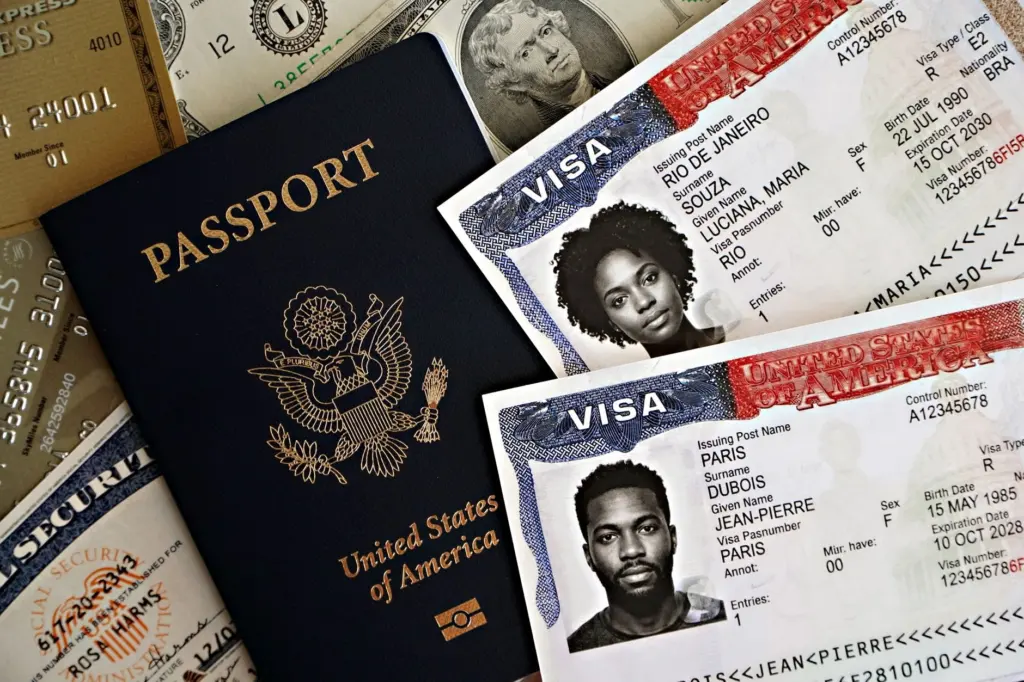
Form I-9 is required for almost all employees. Unlike most onboarding paperwork, it is completed by both the employee and the employer. The employee fills in their part, and the employer completes the other part. That split is why it needs a person on your side, not just a link sent to the new hire.
Book time on or before the start date for whoever handles the employer section, and keep it with the hire’s records. Confirm the exact deadline for each section in the current USCIS instructions for the form before you set your schedule. Where possible, aim to have the employee finish their part before or during the first day, which is the timing Group Management recommends for required forms.
Form W-4
Form W-4 lets employees specify how much federal income tax should be withheld from their paychecks. Its purpose is purely payroll accuracy, so the timing matters more than the content. Completing it early allows the employer to process payroll accurately from the first paycheck.

If a new hire hands it in late, payroll has no instruction to work from, which can mean corrections later. Send it with the offer paperwork or hand it over on day one, and make it a hard checkpoint before payroll closes for the first period.
State and company paperwork
After the federal forms, the list depends on where the employee works and how your company operates. Group Management states that additional requirements may vary depending on state laws and company policies. Check each one against your own state before treating it as mandatory.
State tax withholding form
Depending on the state, employees might need to fill out extra state withholding forms. Not every state asks for one, so do not copy another employer’s packet. Look up your state’s labor or revenue department page, and confirm the right form when you hire in a new state. A remote hire in a different state from your office may need different paperwork from the rest of the team.
Offer letter and employment agreement
The offer letter and any employment agreement detail compensation, responsibilities, employment status and start date. They are usually issued before the first day, so they work as the first signed record of what was promised. Keep the wording consistent with the job posting and with what the hiring manager said, because mismatches are where disputes begin.
Confidentiality agreement
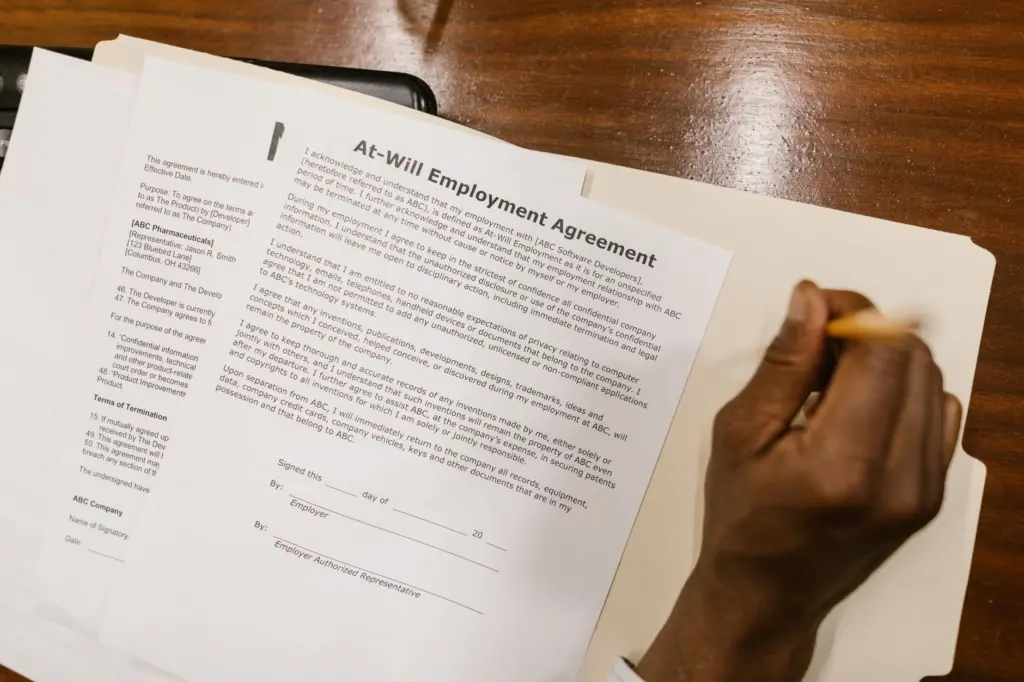
Talroo’s checklist lists a non-disclosure agreement and a non-compete agreement among forms that may be required before employment. The word “may” matters. These agreements are a company choice, not a federal form, so include one only when your business has a reason to protect information. Have it reviewed against your state’s rules before using it.
Direct deposit form
Employees choosing direct deposit must provide their banking information. Offer it as a choice rather than a requirement, and collect it before the first payroll run so the first payment does not have to be handled another way. Store it separately from the general packet, since it holds sensitive financial details.
Optional acknowledgments
A handbook acknowledgment is not a federal form, and the evidence supports treating it as good practice. Group Management groups it with the company-specific documents that businesses should provide beyond required government forms, and says a signed acknowledgment ensures employees have received and reviewed the information.
That receipt record is the whole value. It shows the employee was given the policies, which helps if expectations are later questioned. Whether your state or company policy makes it compulsory is a separate question, so check before you drop it. The practical rule is to hand over the handbook first and collect the signature after the employee has had a chance to read it, rather than placing the page in front of them with the other first-day forms.
Building the onboarding packet
An onboarding packet bundles the paperwork with the information a new hire needs. Talroo says every checklist should include a welcome package covering company background, policies, pay information and contacts. Government forms and acknowledgments sit alongside that material, not in place of it.

- Sort by obligation. Put the employment eligibility verification form, the federal income tax withholding form and any state withholding form in the first section, so nothing required is buried.
- Add company agreements. Include the offer letter, any confidentiality agreement and the direct deposit form in a second section.
- Include reference material. Add company background, policies, pay information and contacts, as the welcome package guidance suggests.
- Finish with acknowledgments. Place the handbook acknowledgment last, after the reference material it refers to.
- Keep one home for it. Slack recommends a centralized hub for handbooks, benefits information and company values, so the packet points to a single place instead of scattered files.
If you would rather start from a template, Duke HR lists an onboarding binder template among its manager tools. Adapt it to your own forms rather than copying its contents.
Timing and review
The guidance is consistent on timing: employers should have employees complete required forms before or during their first day. Send the pre-start items, such as the offer letter and direct deposit form, in advance. Keep the first day for the I-9, where you must be present, and for the W-4 if it was not returned early.
Run a quick completeness check by the end of the first day. Missing paperwork is one of the common onboarding mistakes, and it is easy to catch while the employee is still in front of you. Once the process is stable, track whether forms arrive on time, as described in how to measure onboarding success.
Frequently asked questions
| Question | Answer |
|---|---|
| What documents do new employees need to sign? | Most employers need Form I-9 and Form W-4, plus any state withholding form. Offer letters, direct deposit authorization, confidentiality agreements and handbook acknowledgments are company-level choices. |
| What are the I-9 and W-4 and when must they be completed? | The I-9 is required for almost all employees and is completed by both employee and employer. The W-4 sets federal income tax withholding. Aim to finish both before or during the first day, and confirm I-9 section deadlines in the USCIS instructions. |
| What should be in an onboarding packet? | The required forms, company agreements and a welcome package with company background, policies, pay information and contacts. Direct deposit details are included only for employees who choose it. |
| Is an employee handbook acknowledgment form required? | It is a company-specific document, not a federal form. It confirms the employee received and reviewed the handbook. Requirements can vary by state law and company policy, so confirm yours. |